


PERFORMANCE INTELLIGENCE / MEN'S HEALTH
Your 40s Don't Require Lower Standards. They Require Better Data.
A practical guide to strength, body composition, cardiovascular fitness, metabolic health, recovery and the health markers that become increasingly important for high-performing men over 40.
Built for men who want their physical performance to keep pace with their ambition.
THE PEAK ID VIEW
Getting Older Isn't the Problem. Ignoring What's Changing Is.
Your 40s and 50s can coincide with some of the most professionally successful years of your life.
More experience. More influence. More responsibility. More financial freedom.
But for many men, physical performance begins moving in the opposite direction.
The waistline increases.
Recovery takes longer.
Energy becomes less predictable.
Strength and muscle can become harder to maintain.
Sleep gets worse.
Work and family leave less time for training.
And what worked at 30 doesn't always fit life at 45.
This doesn't mean physical decline should simply be accepted.
It means your strategy needs to evolve.
The areas worth paying attention to include:
Strength and muscle mass
Body composition and waist circumference
Cardiovascular fitness
Blood pressure
Metabolic health
Relevant blood biomarkers
Sleep and recovery
Nutrition
Training
Lifestyle and stress
The goal isn't to become 25 again.
It's to remain strong, capable and high-performing for the decades ahead.
EXPLORE THIS GUIDE
AGE & PERFORMANCE
Age Changes the Equation.
It Doesn't End the Game.
There's a dangerous narrative around men's health after 40.
"It's just your age."
Lower energy? → Age.
Gaining weight? → Age.
Losing strength? → Age.
Poor sleep? → Age.
But ageing is only part of the picture.
Changes in lifestyle often happen at the same time.
You may have:
Greater professional responsibility
More time spent sitting
Less spontaneous activity
More business travel
More alcohol and restaurant meals
Less consistent training
Greater family responsibility
Higher levels of sustained stress
Less sleep
Less time dedicated to recovery
Separating ageing from environment, behaviour and health matters.
Because while you can't control your date of birth, there are many factors influencing how you age that you can influence.
WHAT MATTERS
Stop Judging Your Health By the Mirror Alone.
Looking good matters to many men.
There's nothing wrong with that.
But body fat is only one component of physical performance.
A better picture considers multiple areas simultaneously.
BODY COMPOSITION
Body fat
Waist circumference
Muscle mass
Weight trend
STRENGTH & CAPACITY
Strength
Muscular endurance
Mobility
Functional capacity
CARDIOVASCULAR
Cardiovascular fitness
Resting heart rate
Blood pressure
VO₂ max where appropriate
METABOLIC HEALTH
Blood glucose
HbA1c
Relevant lipid markers
Other appropriate biomarkers
RECOVERY
Sleep duration
Sleep consistency
Energy
Training recovery
LIFESTYLE
Alcohol
Nutrition
Movement
Stress
Travel
Working patterns
No single number defines your health.
The objective is to build a performance dashboard, not obsess over one metric.
THE VISIBLE SIGNAL
The Belly Is Often What Gets Your Attention. It's Rarely the Whole Story.
For many men, the first sign that something has changed is physical.
Your shirts fit differently.
Your belt moves another notch.
You avoid taking your top off on holiday.
You see a photograph and barely recognise the shape you've developed.
And despite training occasionally and eating reasonably well, it doesn't seem to shift as easily as it once did.
Body composition is influenced by energy intake, activity, training, sleep, behaviour, environment and individual health factors.
The solution isn't automatically:
"Eat less and exercise more."
Those fundamentals matter.
But so does creating a system that allows you to execute them consistently within your actual life.
Because a perfect diet followed for ten days is less useful than a good nutrition strategy you can sustain for ten months.
PHYSICAL CAPACITY
Muscle Is More Than Something That Makes You Look Better in a T-Shirt.
Maintaining muscle and strength becomes increasingly important as you age.
Not because everyone needs to chase bodybuilding numbers.
But because strength supports physical capability.
Carrying luggage • Playing with your children • Skiing • Golf • Hiking • Getting off the floor easily • Remaining independent later in life
Looking physically capable is one benefit.
Being physically capable is the bigger objective.
Resistance training, sufficient nutrition and appropriate recovery all contribute to maintaining and developing strength and muscle.
The goal should be to enter each decade with as much useful physical capacity as reasonably possible.
THE ENGINE
Your Career Has Required Endurance. Your Body Does Too.
You can look relatively healthy and still have poor cardiovascular fitness.
This is why performance can't be assessed through body composition alone.
Cardiovascular training develops your ability to sustain physical work and is an important component of overall health.
Depending on the individual, training may include a combination of lower-intensity aerobic work and higher-intensity exercise.
The exact prescription should reflect current fitness, health status, goals and training experience.
For high-performing men, cardiovascular fitness also has an important psychological advantage:
You feel capable.
Stairs aren't a problem.
Skiing doesn't destroy you.
A charity 10K doesn't require six months of panic.
You can say yes to physical experiences without wondering whether your body will keep up.
BENEATH THE SURFACE
Looking Healthy and Being Healthy Aren't Always the Same Thing.
Weight and appearance are visible.
Metabolic health often isn't.
Measures such as Blood Glucose, HbA1c, Blood Pressure, Waist Circumference and Appropriate Lipid Markers can provide additional information about health and risk.
This becomes particularly relevant when years of:
Long working hours • Low activity • Restaurant meals • Alcohol • Poor sleep • Weight gain • Stress
...have gradually become normal.
The purpose of measurement isn't to create anxiety around numbers.
It's to identify what deserves attention while there's still an opportunity to act.
And where results suggest a potential medical issue, they should be discussed with an appropriately qualified healthcare professional.
HORMONES
Testosterone Matters. But It Isn't the Answer to Everything.
Men's health content online has developed an obsession with testosterone.
Low energy? → Testosterone.
Belly fat? → Testosterone.
Poor motivation? → Testosterone.
Bad gym session? → Testosterone.
Reality is more complicated.
Hormones form part of a wider physiological system and symptoms such as fatigue, reduced performance or changes in body composition can have many potential contributors.
Appropriate blood testing may help provide additional information, but numbers need context.
Sleep • Energy intake • Training • Body composition • Alcohol • Stress • Medications • Health conditions
All can matter.
The objective isn't to chase one "optimal" number from the internet.
It's to understand the wider picture and involve appropriate healthcare professionals where clinical investigation is required.
RECOVERY
You Can't Outperform Poor Recovery Forever.
At 25, you may have been able to sleep five hours, train hard, work all day and repeat it.
That doesn't mean it was optimal then.
And it certainly doesn't mean it should remain the strategy indefinitely.
Recovery determines how well you're able to respond to the demands placed upon you.
Those demands aren't only training.
They're also:
Work • Travel • Family • Stress
Alcohol • Late nights • Early mornings • Poor nutrition
Your body doesn't separate "work stress" from the rest of the workload it has to manage.
This is why training needs to be considered alongside the rest of your life.
More isn't automatically better.
Better is better.
FUEL
You Don't Need a More Extreme Diet.
Keto • Fasting • Low carb • Detoxes • Meal replacements • Another 30-day challenge
Many successful men approach nutrition exactly as they approach business problems:
Go harder.
But extreme restriction often creates an equally extreme rebound.
A better foundation focuses on sustainable principles.
Appropriate energy intake • Sufficient protein • High-quality food most of the time
Fruit and vegetables • Fibre • Hydration • Flexibility
And a strategy for RESTAURANTS, ALCHOHOL, HOLIDAYS and WEEKENDS.
Because the objective isn't to prove you can follow a diet.
It's to develop a way of eating that supports the life you actually want.
TRAIN SMARTER
Stop Training Like You're Still 25.
Training hard can be valuable.
Training intelligently is more important.
A well-designed programme considers:
Your goals • Current fitness • Training history • Available time • Injury history • Lifestyle • Recovery
• And the demands you're already carrying outside the gym.
For many men, an effective programme will incorporate some combination of:
Strength training
Maintain and develop muscle and physical capacity.
Cardiovascular training
Develop aerobic and cardiovascular fitness.
Movement
Avoid allowing a desk-based lifestyle to dominate the other 23 hours of your day.
Mobility
Maintain the movement required for training and everyday life.
Recovery
Allow adaptation rather than simply accumulating fatigue.
Your programme should make you more capable.
Not permanently exhausted.
YOUR PERFORMANCE DASHBOARD
What Gets Measured Gets Context.
There isn't one perfect men's health score.
Instead, build a picture from multiple sources of information.
BODY
Weight trend • Waist circumference • Body composition where useful
HEART & FITNESS
Blood pressure • Resting heart rate • Cardiovascular fitness • VO₂ max where appropriate
PERFORMANCE
Strength • Training performance • Physical capacity
RECOVERY
Sleep • Energy • Recovery • HRV where useful
BLOOD
Appropriate metabolic • Cardiovascular • Hormonal • Nutritional • General health biomarkers
LIFESTYLE
Alcohol • Movement • Nutrition • Training consistency • Travel • Stress
BODY
Weight trend
Waist circumference
Body composition where useful
HEART & FITNESS
Blood pressure
Resting heart rate
Cardiovascular fitness
VO₂ max where appropriate
PERFORMANCE
Strength
Training performance
Physical capacity
RECOVERY
Sleep
Energy
Recovery
HRV where useful
BLOOD
Appropriate metabolic
Cardiovascular
Hormonal
Nutritional
General health biomarkers
LIFESTYLE
Alcohol
Movement
Nutrition
Training consistency
Travel
Stress
The purpose isn't to track everything forever.
It's to understand what information actually helps you make better decisions.
WHAT DOES HEALTH ACTUALLY BUY YOU?
The Goal Isn't a Six-Pack at 50.
At least, not just that.
The real return is capability.
You're 50 and your children want to ski.
→ You go.
You're invited to play 18 holes.
→ You walk it.
Your friends enter a charity cycling event.
→ You don't hesitate.
You spend a week travelling for work.
→ It doesn't take another week to recover.
You wake up with energy • You take your shirt off on holiday without thinking about it • You feel strong
Your physical presence matches the standards you've created everywhere else.
That's the bigger objective.
A body that expands what you can do rather than gradually restricting it.
THE LONG GAME
Don't Just Add Years. Protect Your Capacity Within Them.
For a high-performing man in his 40s, longevity can feel abstract.
70 feels a long way away.
But the decisions you're making now influence the physical capacity you take into those decades.
The goal isn't immortality.
It's compression of decline.
Remain strong for longer.
Remain cardiovascularly fit for longer.
Maintain independence.
Maintain cognitive and physical capability.
Continue travelling.
Continue working if you choose.
Continue playing.
Continue experiencing.
You've spent decades creating financial freedom.
Your health determines how much of that freedom you're physically capable of enjoying.
OUR APPROACH
Don't Guess What Your Next Decade Needs.
Peak ID approaches men's health after 40 as a system.
Not simply:
"Here's your workout."
We look at the wider picture.
01- UNDERSTAND WHERE YOU ARE
- - - - - - - - - - - - - - - - - - - - - - - - - - - - - -
Health data, lifestyle, body composition, training, nutrition, sleep, environment and goals.
↓
02- IDENTIFY THE BIGGEST CONSTRAINTS
- - - - - - - - - - - - - - - - - - - - - - - - - - - - - -
Rather than trying to fix everything simultaneously.
↓
03- BUILD AROUND YOU REALITY
- - - - - - - - - - - - - - - - - - - - - - - - - - - - - -
Work. Travel. Family. Social life. Available time.
↓
04- MEASURE PROGRESS
- - - - - - - - - - - - - - - - - - - - - - - - - - - - - -
Use relevant objective and subjective data.
↓
05- ADAPT
- - - - - - - - - - - - - - - - - - - - - - - - - - - - - -
Because your programme should change as you do.
FROM THE FOUNDER
Your Best Physical Years Don't Have to Be Behind You.
quote:
"We don't try to turn a 45-year-old CEO back into the man he was at 25. We build the strongest, healthiest and most capable version of the man he is now."
James Gough
Founder, Peak ID
James, what would you say to a successful 45-year-old man who thinks feeling tired, gaining weight and losing fitness is simply part of getting older?
THE EVIDENCE
Men Like You. Real Outcomes.
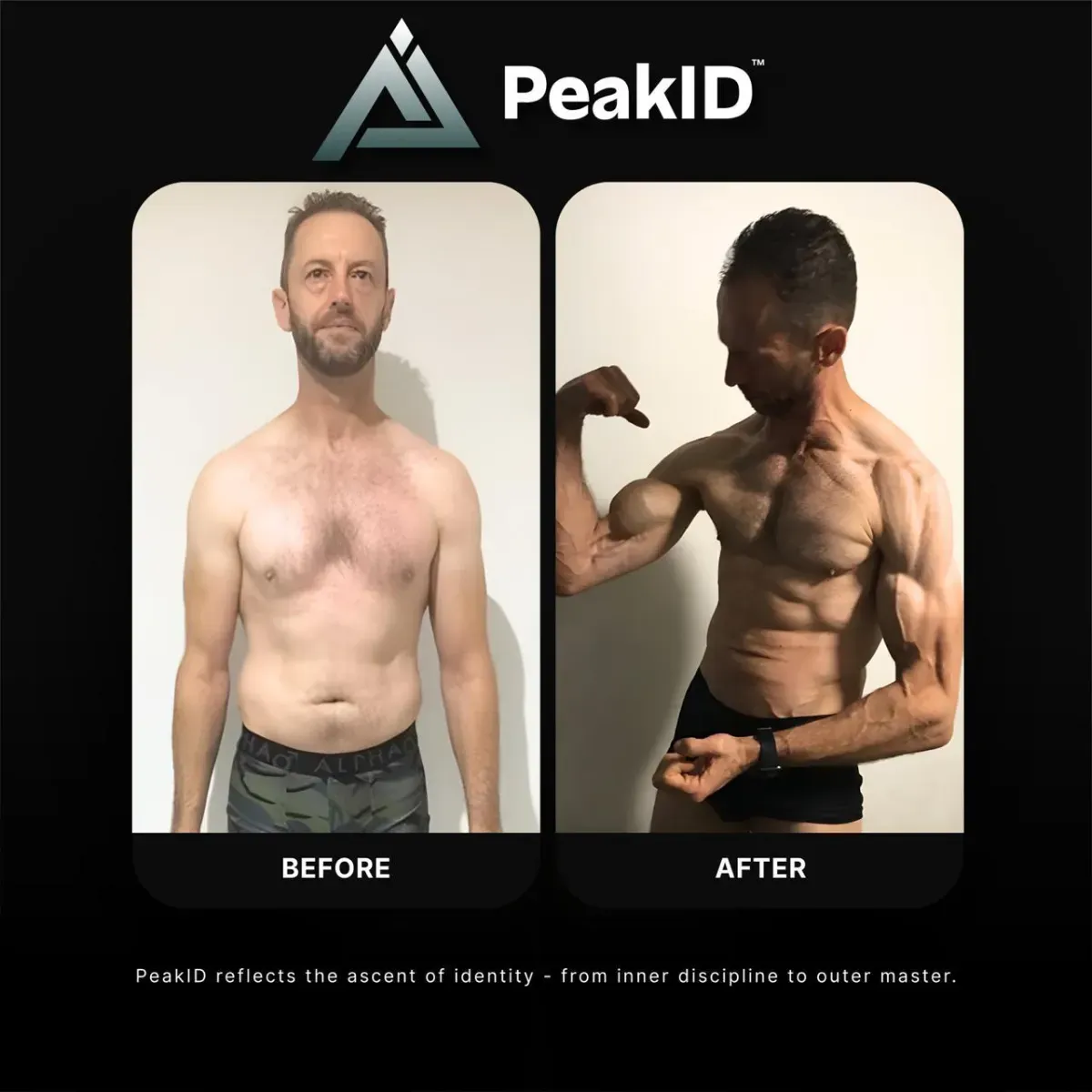
Terry
Senior exec under pressure. Lost 9kg fast and built a powerful physique to match his high-level mindset.
"These results are not typical. All transformations are unique, and your results will depend on many factors including your commitment, consistency, and individual circumstances."
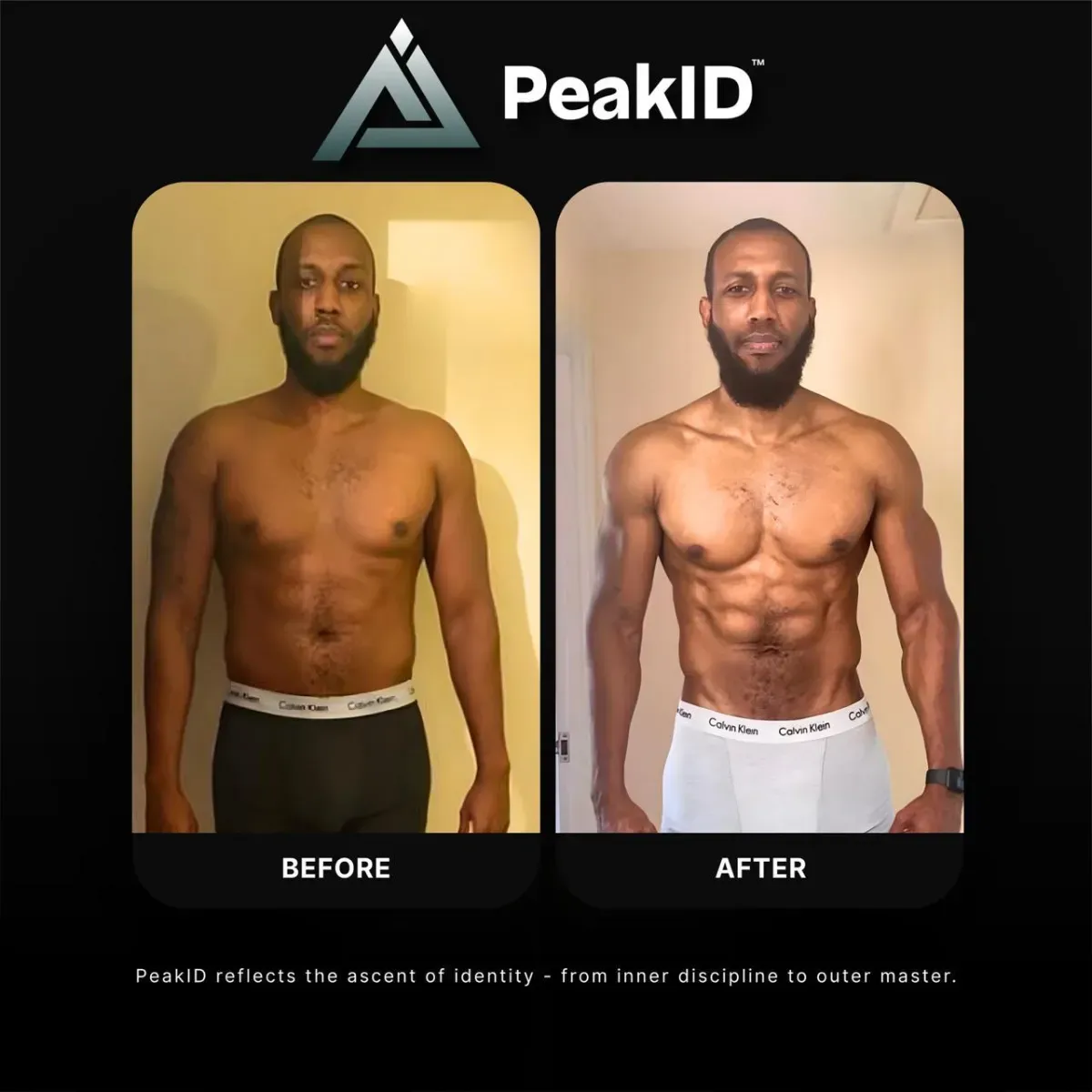
Niall
Property investor. No time, no excuses but achieved a shredded physique in 90 days while expanding his empire.
"These results are not typical. All transformations are unique, and your results will depend on many factors including your commitment, consistency, and individual circumstances."
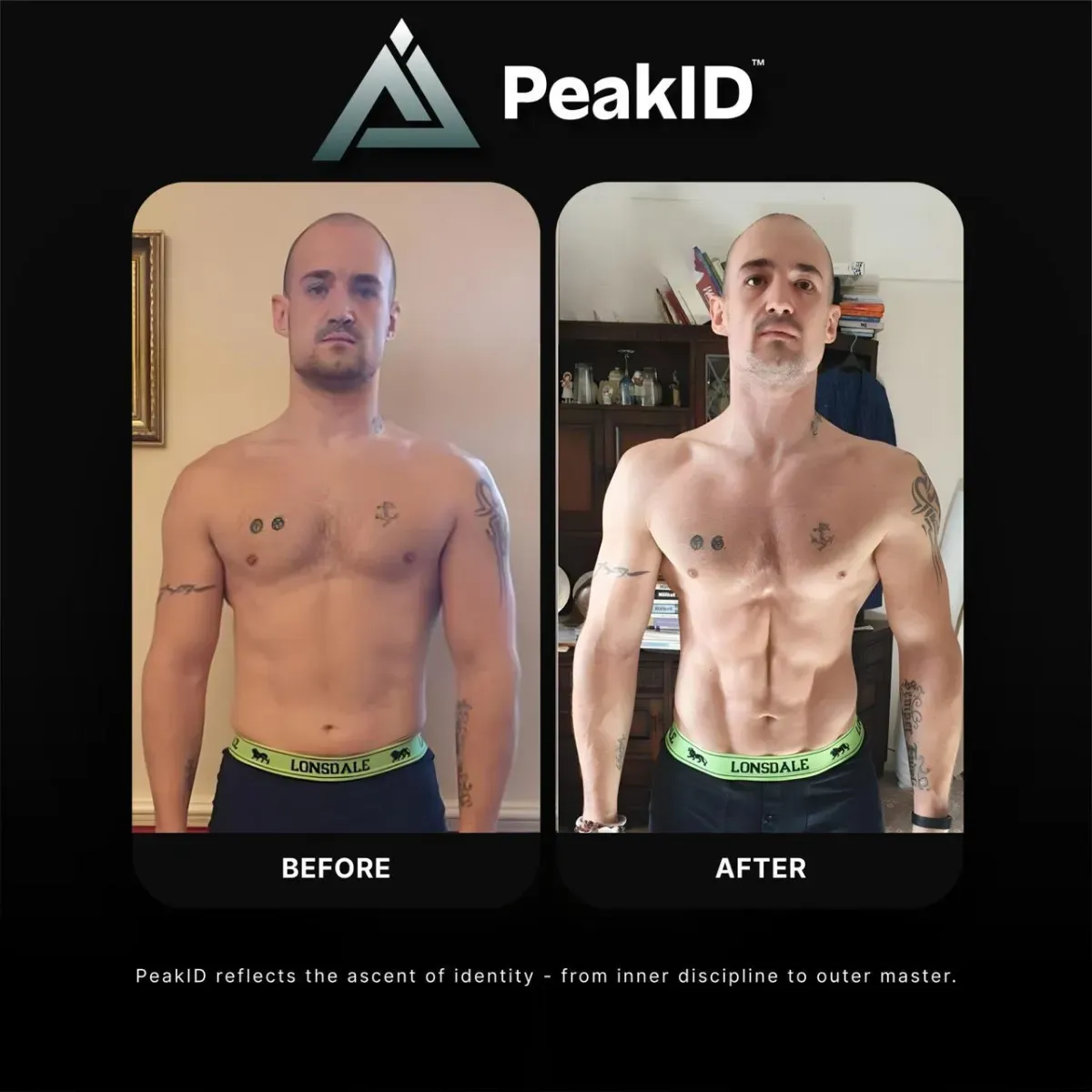
Oliver
Property investor balancing multiple projects. Dropped 11kg, gained clarity, and built a physique that reflects his ambition.
"These results are not typical. All transformations are unique, and your results will depend on many factors including your commitment, consistency, and individual circumstances."
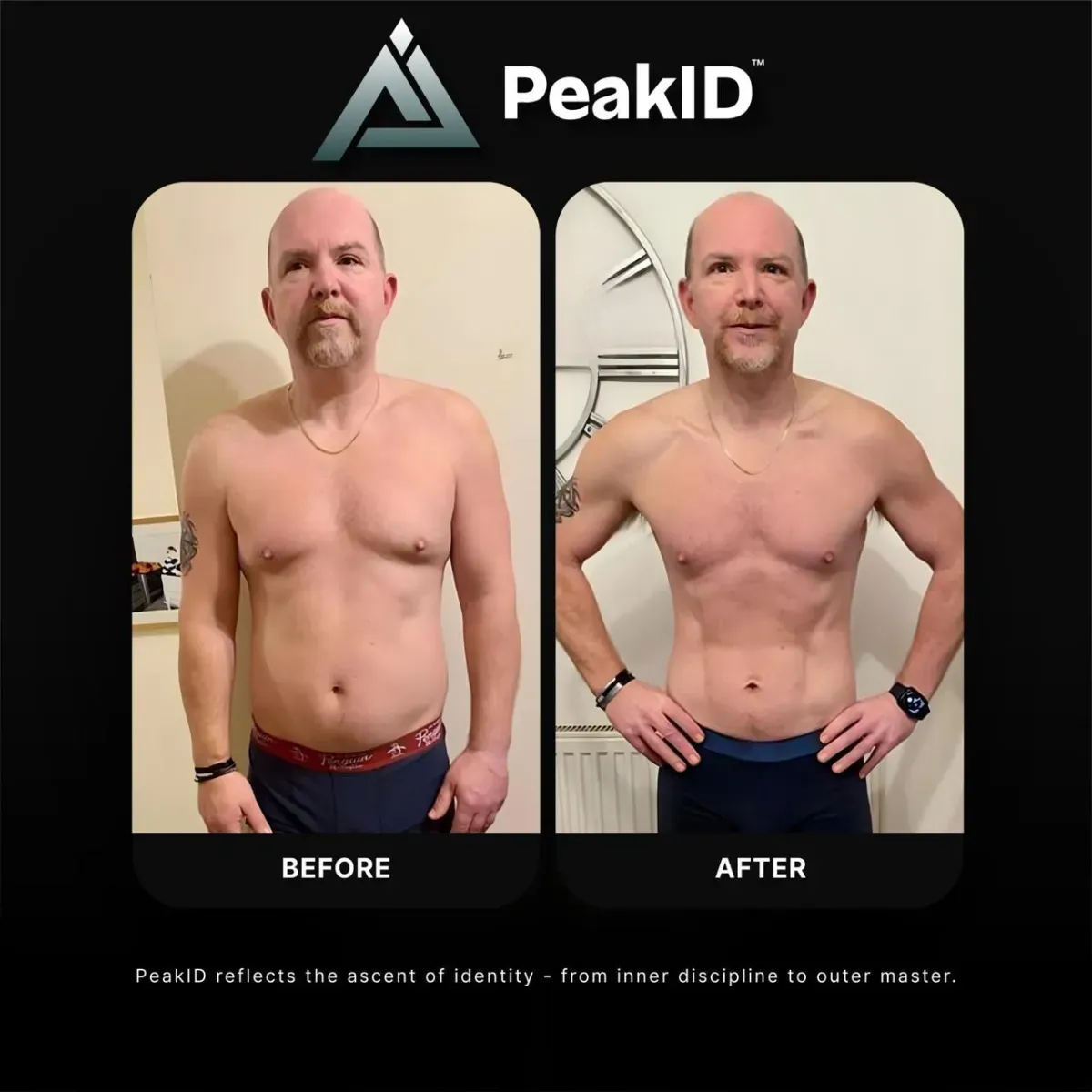
Mike
Multiple business owner. Dropped 10kg and revealed abs in just 90 day while scaling his companies.
"These results are not typical. All transformations are unique, and your results will depend on many factors including your commitment, consistency, and individual circumstances."
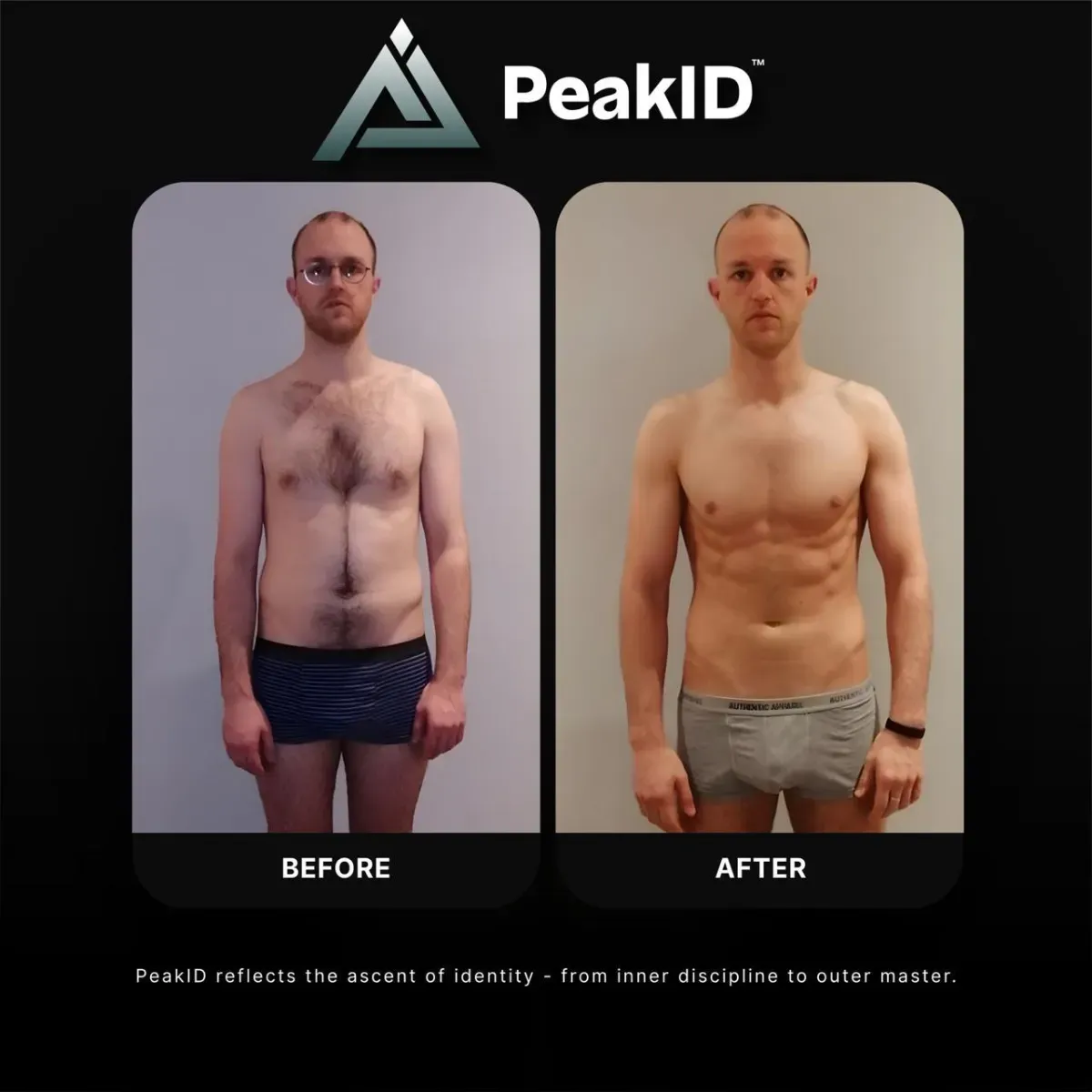
Brett
Property specialist. Came in lost, left with abs and inspired his team by becoming the example.
"These results are not typical. All transformations are unique, and your results will depend on many factors including your commitment, consistency, and individual circumstances."
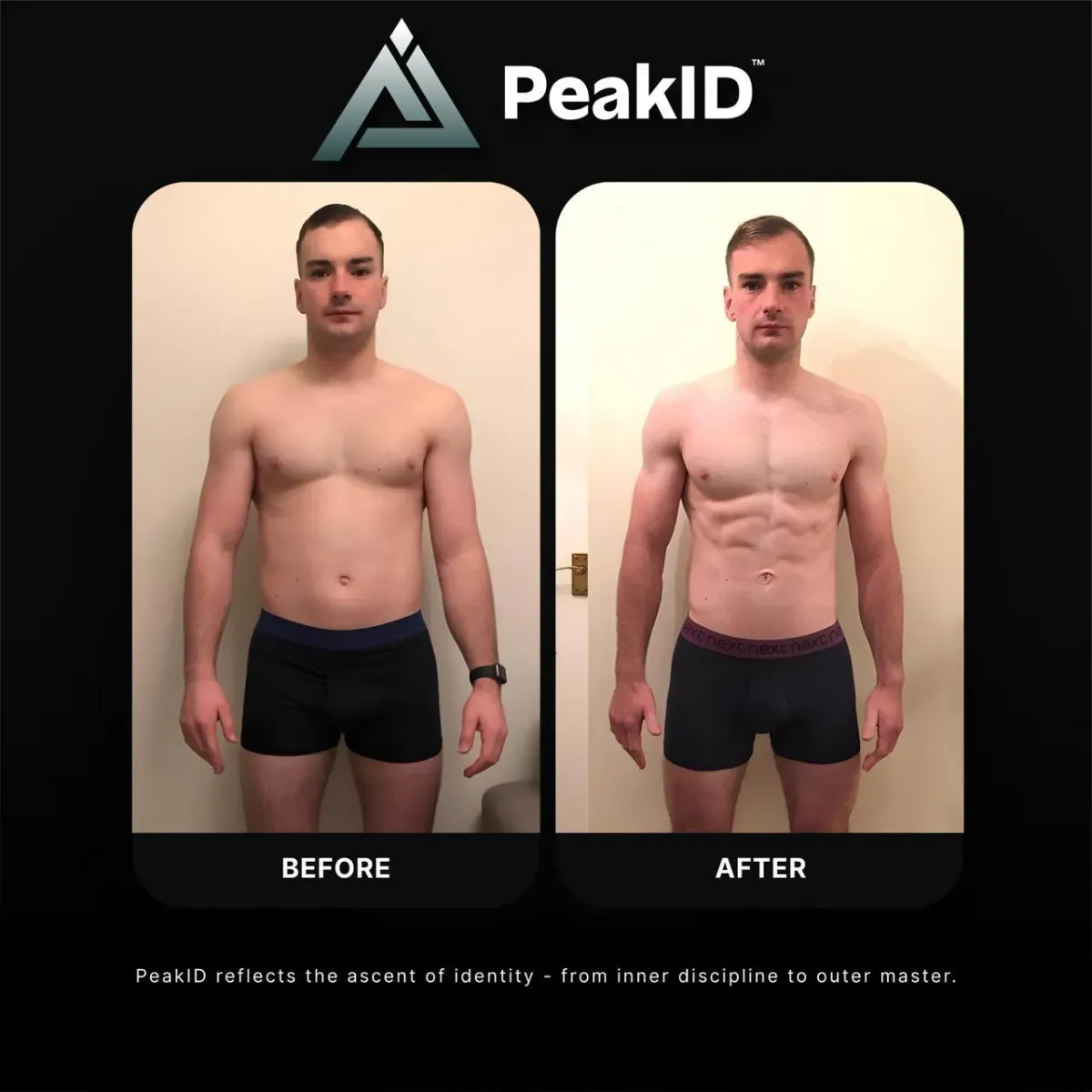
Greg
Entrepreneur and business owner. Came in unfocused. Built structure, lost 10kg, and now performs like a weapon in and out of the boardroom.
"These results are not typical. All transformations are unique, and your results will depend on many factors including your commitment, consistency, and individual circumstances."
Individual results vary. Client examples shown reflect individual experiences and are not a guarantee of typical results. Outcomes depend on factors including starting point, adherence, lifestyle, physiology and individual circumstances.
GO DEEPER
Explore Men's Health After 40
BODY COMPOSITION
Why Does Belly Fat Become Harder to Lose After 40?
HORMONES
Testosterone After 40: What Men Need to Understand
STRENGTH
How Much Strength Training Do Men Over 40 Need?
CARDIOVASCULAR FITNESS
VO₂ Max After 40: What Is a Good Score?
METABOLIC HEALTH
Which Blood Markers Should Men Over 40 Track?
RECOVERY
Why Does Recovery Take Longer As You Get Older?
Men's Health Over 40 FAQs
EVIDENCE
Sources & Further Reading
Reference claims using appropriate sources including:
NHS
NICE
World Health Organization
British Heart Foundation where relevant
Peer-reviewed systematic reviews
Relevant professional medical organisations
High-quality academic research
For hormone, cardiovascular and metabolic content in particular, clinical claims should be carefully sourced and reviewed where appropriate.
YOUR NEXT DECADE
You've Built the Career. Now Build the Body Capable of Enjoying It.
Peak ID helps founders, CEOs and senior leaders understand where they are today and build a personalised health and performance strategy around their biology, schedule and lifestyle.
Not a generic programme designed for the average 25-year-old.
A system built for the demands you're carrying now — and the life you want to be capable of living next.
Peak ID
Personal performance architecture for founders, executives, and high-achieving professionals.
Company Details:
Name: JG Physique FZ LLE
Licence Number: 18133/2022
Address: Fujairah - Creative Tower
P.O.Box 4422 Fujairah
Navigation
Navigation
none of the information on this page is medical advice
© 2026 Peak ID. All rights reserved. Privacy Policy · Terms & Conditions · Cookie Policy · Refund Policy